Horse racing is one of the few sports where two genuinely different betting systems operate side by side in the UK, and it’s easy to assume they work the same way just because both involve picking a horse and getting paid if it wins. They don’t. Fixed-odds betting, the model used across football, tennis and most other sports, locks in a payout the moment you place your bet. Pool betting, historically run through the Tote, works on a completely different principle, and understanding that difference changes how you read a price before a race even starts.
How fixed-odds betting actually works
Fixed-odds betting is the model most bettors already know. A bookmaker sets a price on a selection — say 5/1 on a horse to win — and once you place your stake at that price, it’s locked in. Whatever happens to the market afterwards, whether the odds drift out to 10/1 or come in to 3/1 before the race, your return is calculated on the price you actually took.
This is what makes fixed-odds betting straightforward to understand: you know your potential payout the second you place the bet. It’s the standard model for the vast majority of sports betting, including most horse racing markets offered by mainstream bookmakers.
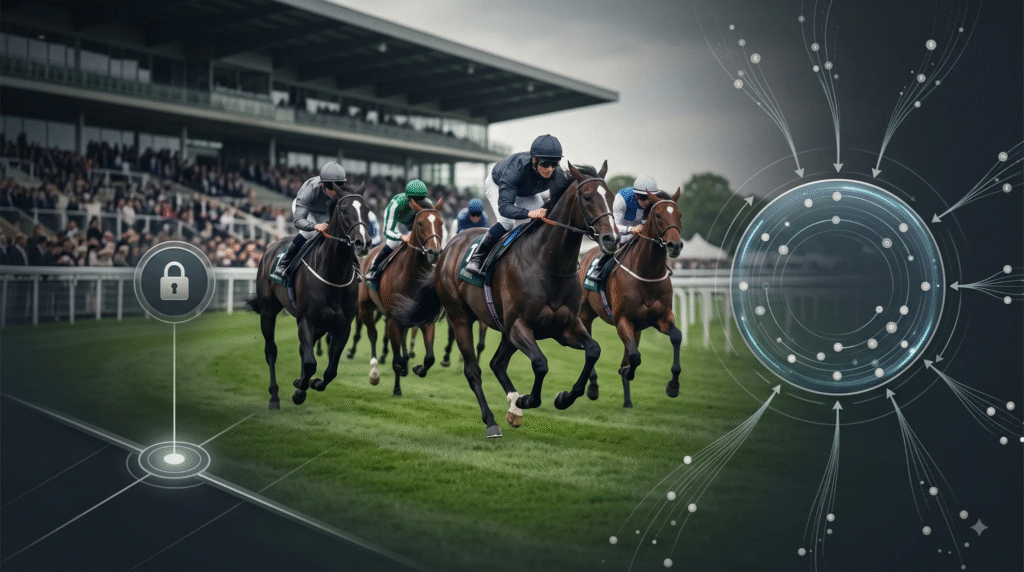
How pool betting works
Pool betting operates on an entirely different mechanism. Every bet placed on a given market — say, all the win bets on a particular race — goes into a shared pool. Once the race finishes, that pool (minus the operator’s deduction) is divided among everyone who backed the winner, in proportion to their stake. The payout isn’t decided by a price fixed in advance; it’s decided by how much money went into the pool and how it’s split after the result is known.
That has a genuinely different practical effect: the odds shown before a pool bet closes are only ever an estimate. The actual return isn’t confirmed until after the race, once the final pool size and the number of winning tickets are known. Two bettors backing the same horse on the same day, in different pools, can end up with different returns even if the pre-race indicator looked similar.
The key difference, side by side
The clearest way to separate the two systems is by when the payout is actually determined. With fixed odds, the number is locked at the moment you bet. With pool betting, the number only exists once the pool closes and the result is in — everything shown beforehand is an estimate that can move as more money comes in.
That difference also changes what you’re actually betting on. With a fixed-odds bet, you’re backing a horse against a price the bookmaker has set. With a pool bet, you’re effectively betting against everyone else in that pool, since your share of the payout depends directly on how the rest of the money is distributed. It’s a subtle shift, but it matters if you’re used to one system and trying the other for the first time.
Pool betting on UK racing continues today through the Tote, the operator most closely associated with this model, running pari-mutuel pools alongside the fixed-odds bookmakers that dominate most other sports betting.
Who regulates racing and betting in the UK
British horse racing itself is run by the British Horseracing Authority (BHA), which sets the racing calendar, the rules of competition and oversees integrity across the sport. The betting side — both fixed-odds and pool betting — falls under the Gambling Commission, the regulator responsible for licensing operators and enforcing standards around transparency and player protection, regardless of which betting model an operator runs.
That split between who regulates the sport and who regulates the betting around it is standard in a mature market like the UK’s, but it’s worth knowing if you’re used to a single body covering both.
Getting comfortable with the terminology either way
Whichever system you’re betting through, horse racing carries its own vocabulary that’s worth knowing before you place anything — terms like each-way, starting price, and ante-post all show up regardless of whether you’re betting fixed odds or into a pool. Our own betting terms explained glossary covers these in more depth, which is a useful reference if horse racing terminology is new to you.
Which one should you actually use?
Neither system is inherently better — they’re just built differently. Fixed odds give you certainty the moment you bet, which suits anyone who wants to know exactly what they stand to win. Pool betting trades that certainty for a payout tied directly to the size and distribution of the pool, which can occasionally produce larger returns on popular races but removes the ability to lock in a price in advance. Knowing which one you’re actually using — and not assuming a pre-race price behaves like a fixed-odds quote when it doesn’t — is the practical takeaway that matters most.
Frequently asked questions
Can the odds shown on a pool bet change after I place it?
Yes. The figure shown before a pool closes is only an estimate. The actual payout is only fixed once the pool closes and the result is known, based on the total pool size and how many winning bets there were.
Is pool betting the same as an each-way bet?
No, they’re separate concepts. Each-way describes splitting a stake between a win and a place outcome, and it can be placed through either a fixed-odds bookmaker or a pool operator. Pool betting refers to how the payout itself is calculated, not the structure of the bet.
Why would two bets on the same horse pay out differently?
If one is a fixed-odds bet and the other is a pool bet, the fixed-odds bet pays out at the price taken when it was placed, while the pool bet pays out based on the final pool distribution — two different calculations that can easily produce different returns.
Who oversees horse racing and betting in the UK?
The British Horseracing Authority regulates the sport itself, covering the racing calendar and integrity. The Gambling Commission licenses and regulates the betting operators, covering both fixed-odds bookmakers and pool betting operators.
Informational content. This article does not constitute betting advice.