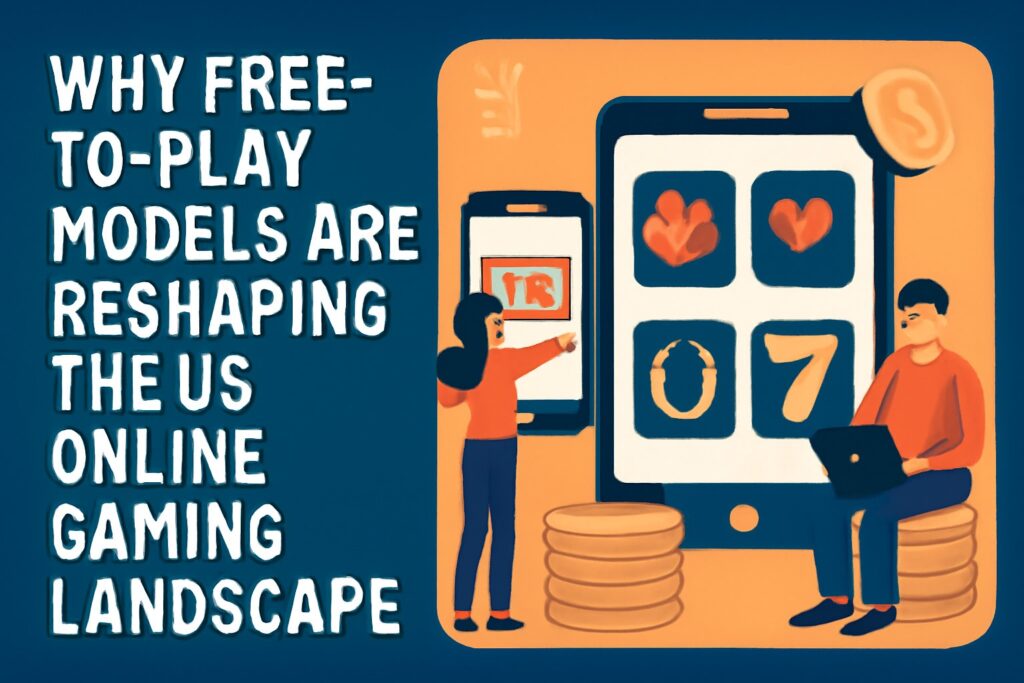
Free-to-play (F2P) in the US has moved way beyond “just passing time.” It’s now become a low-commitment gateway into casino-style games and betting-adjacent entertainment, especially in states where real-money iCasino or sports betting still aren’t on the table. Players can jump in for free, get familiar with how everything works, and only later decide whether they want to spend or move into regulated real-money options. That soft, low-risk entry point is a big part of what’s shifting the market.
For years, online gambling in America has been defined by a mix of federal constraints and state-by-state approvals. The Unlawful Internet Gambling Enforcement Act (UIGEA) restricted payment processing tied to unlawful wagers, which meant that even where demand was strong, online gambling growth stayed cautious and uneven.
A major modern shift landed on May 14, 2018, when Murphy v. NCAA overturned PASPA and gave states the freedom to legalize sports betting on their own terms.
Sports betting spread fast after that, but online casino legalization didn’t keep pace and remains limited to a small number of states. That gap left a massive national audience interested in casino-style online play without a legal iCasino pathway to use.
Free-to-play and sweepstakes formats stepped directly into that space.
The earliest social casinos were straightforward: slots and table games with play-money chips only. There were no prizes and no way to cash out—just light entertainment. Over time, operators started adding sweepstakes layers that leaned on the US promotional law idea of “no purchase necessary.” As long as there’s always a free route to enter and participate, operators argue the product fits sweepstakes rules instead of gambling law.
Most leading F2P casinos today are powered by a two-wallet system:
That dual-track setup is what fuels the model’s scale. For users, it feels like iCasino play. Legally, it’s framed differently.
F2P works because it wipes out the usual barriers that make new players hesitate:
This is why players who start in free environments so often convert into real-money customers later. The habit and comfort come first; spending comes when they’re ready.
Brazil’s market highlights the same underlying psychology behind F2P momentum: people like learning without pressure. Netflu’s explainer on free casino demo play shows how try-first modes build familiarity and confidence before users ever spend money—the same behavioral driver pushing US sweepstakes casinos forward.
Outside the US, the “play first, pay later” funnel is popping up through fantasy and pick’em ecosystems too. In India, the rise of fantasy sports contests has made prediction-style play feel normal long before real-money wagering, echoing the US F2P-to-betting pathway.
This space isn’t small anymore. KPMG estimates sweepstakes casinos grew roughly 60–70% CAGR from 2020–2024, with 2024 gross revenue topping $10.6B and forecasts pushing past $14B in 2025. At the same time, US commercial gaming overall keeps setting records, reaching $71.9B in 2024. When F2P starts looking like a parallel nationwide casino layer inside that broader surge, regulators pay attention.
California is the clearest warning shot so far. AB 831, signed in October 2025, bans dual-currency sweepstakes casinos statewide starting January 1, 2026. New York has also leaned on major sweepstakes brands to scale back Sweeps-style play.
A live industry/legal take on AB 831’s implications has been widely shared on X, including this still-live post by gaming attorney Daniel Wallach:
To see why this fight is heating up, compare “pure F2P” with real-money casino play. This North-American overview explains the difference clearly across structure, currency, licensing, and player safeguards.
Upsides
Tradeoffs
The same “learn first, pay later” logic exists outside sweepstakes. In Chile, sportsbooks often reduce first-time risk with structured welcome offers, creating a similar safety net for newcomers.
From the operator perspective, F2P offers:
The numbers support it. An Optimove/industry analysis noted that sweepstakes platforms were adding players at around 16% month-over-month in late 2024, far outpacing real-money online casinos.
| Model type | How it works | Why it’s growing | Big regulatory tension |
|---|---|---|---|
| Social casino (pure F2P) | Virtual chips only, no prizes | Legal nearly everywhere, casual appeal | Lower prize incentive ceiling |
| Sweepstakes casino (dual currency) | Free play + redeemable sweeps path | Feels like iCasino without iCasino licenses | State bans (e.g., CA AB 831) |
| Pick’em / DFS hybrids | Skill/fantasy framing, often with free modes | Betting-adjacent in restricted states | Risk of reclassification |
| Prediction-market style apps | Event contracts regulated federally | Alternative path into tight states | Ongoing legal debate |
Comment: Sweepstakes models are the main disruptor because they sit closest to real-money casinos while still offering a free, legal entry route.
The sweepstakes field is crowded now, but a few brands sit at the top. Many players first encountered the idea through Chumba Casino, which helped popularize the dual-currency approach nationwide. Other major names include:
A useful way to see why F2P is exploding in the US is to look at how sweepstakes casinos structure “free entry + optional spend.” This breakdown of US online sweepstakes casinos shows the dual-currency model (Gold Coins vs Sweeps Coins) that’s driving adoption nationwide.
| Brand | F2P model | Primary focus | Normal user appeal |
|---|---|---|---|
| Chumba | Sweepstakes dual-currency | Slots + mixed casino | Classic “starter” sweeps lobby |
| Stake.us | Sweepstakes dual-currency | Originals + casino | Fast, modern, community-driven |
| Pulsz | Sweepstakes dual-currency | Casino variety | Big lobby, table-game depth |
| McLuck | Sweepstakes dual-currency | Slots | Bonus-heavy casual funnel |
| High 5 | Sweepstakes dual-currency | Slots + live dealer | Recognizable studios, slick UX |
| Crown Coins | Sweepstakes dual-currency | Slots/casino | Strong daily rewards |
Comment: The dual-currency sweepstakes playbook is now the default F2P casino format across the US.
Sweepstakes products feel different from older online casinos because they behave like mobile games: streaks, timed drops, quests, social hooks, and tight retention loops. This piece on how US iGaming brands are learning from more mature global markets captures that shift well, especially around pacing and keeping players engaged.
Brazilian betting media makes a similar point in another setting: players want to test things out and build comfort before spending. Netflu’s guide to free casino demos explains how zero-risk play increases confidence and keeps users involved longer—the same behavioral engine behind US sweepstakes growth.
F2P rooms and regulated sportsbooks increasingly look like two layers of the same funnel. Once people learn game rules and get used to online play in free formats, stepping into a sportsbook feels far less intimidating. If you want a neutral look at the regulated side, here’s a current reference list of the best betting sites in the US.
Free-to-play works because it removes the deposit wall and lets users dip a toe in first. Traditional betting markets chase the same low-friction effect in other ways: for example, Chilean operators rely heavily on welcome bonuses and free-bet offers to reduce the risk of a first session, as covered in this 1xBet bonus guide.
But the next chapter won’t be decided by growth alone. The real deciding force is regulation. California’s AB 831 ban (effective January 1, 2026) and New York’s pressure on major operators show the US actively redrawing the boundary between “game” and “gambling.”
This shift isn’t limited to the US, either. In mature betting markets like the UK, regulation has long shaped how operators onboard new users, promote offers, and position low-risk entry points. Suppose you’re curious how that looks in a fully regulated ecosystem, especially compared to the US sweepstakes route. In that case, it’s worth checking out a current overview of the best betting sites in the UK, where licensing and consumer protections play a far bigger role in defining the player experience.
Looking ahead from 2026 onward: F2P probably doesn’t disappear: it adapts. Expect either a properly defined regulated sweepstakes tier or a steady migration of leading brands into licensed iCasino frameworks as more states legalise online casinos. Either way, the “try it free first” mindset is now baked into how Americans discover and adopt online gaming.