Latin America (LATAM) is quickly becoming one of the most energetic hubs for online gaming and betting. The region’s growth is fueled by a mix of regulatory models, licensing rules that are still taking shape in several countries, and rising attention from international operators,especially from the UK and Canada. This overview breaks down how licensing works across LATAM, what applicants usually need to qualify, who the main licence holders are, and how the region’s direction fits into the wider global iGaming movement.
Understanding the LATAM Regulatory Landscape
Regulation of online gaming in LATAM is anything but uniform. Each country,and sometimes individual states or provinces,sets its own standards for licensing, supervision, and enforcement. Some markets have already built structured systems with clear compliance expectations, while others are still navigating unclear, shifting, or tightly restrictive policies.
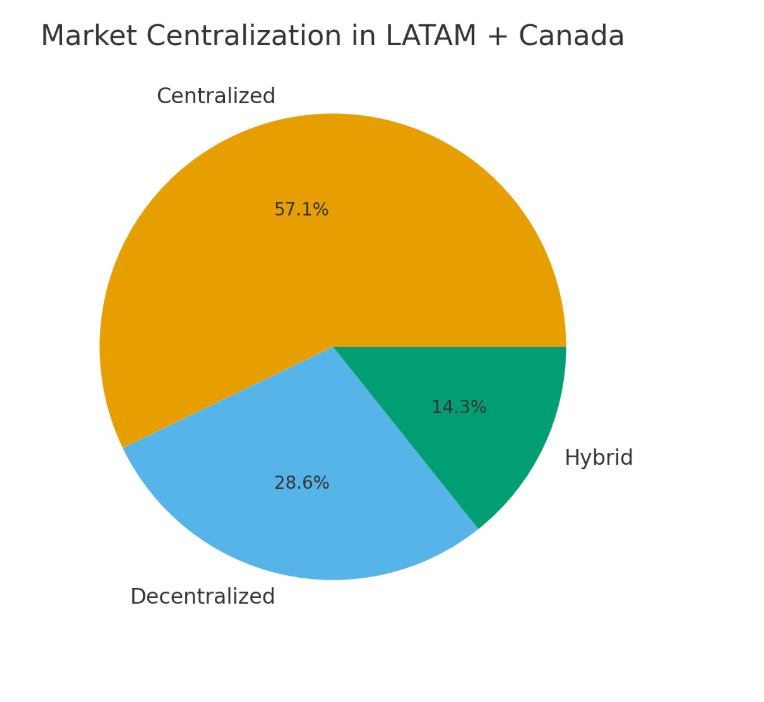
Centralized vs. decentralized regulation: One of the biggest dividing lines in LATAM is whether a country regulates gaming at the federal level or leaves it to local authorities. Brazil, Colombia, and Peru handle licensing through national regulators, typically with firm entry conditions and heavy oversight. Argentina, by contrast, assigns responsibility to its provinces, meaning every province functions like its own small market. For operators looking into online betting in Argentina, this creates multiple regulatory lanes to follow. Across these decentralised markets, operators generally must partner with local entities, show strong data-protection standards, implement responsible-gambling safeguards, and maintain full financial transparency. Responsible gambling is the core of gambling regulation – a good model of a strong online responsible gambling is the UKGC, for the United Kingdom Regulations.
Recent regulatory shifts: Several LATAM countries have made major moves recently. Brazil introduced Law No. 14,790 in January 2025, bringing online casino regulation under a centralized framework and removing dependence on offshore licensing. Peru launched a comprehensive licensing and tax model in late 2024, while Colombia has remained a regional leader since establishing a robust regulatory system back in 2016.
Taken together, these steps point to a wider push across the region toward clearer rules, stronger channelization, and better protection for players.
Market Centralization for LATAM and Canada, showing how the region’s major iGaming markets are structured.
Key Legal Requirements for Online Gaming Licenses
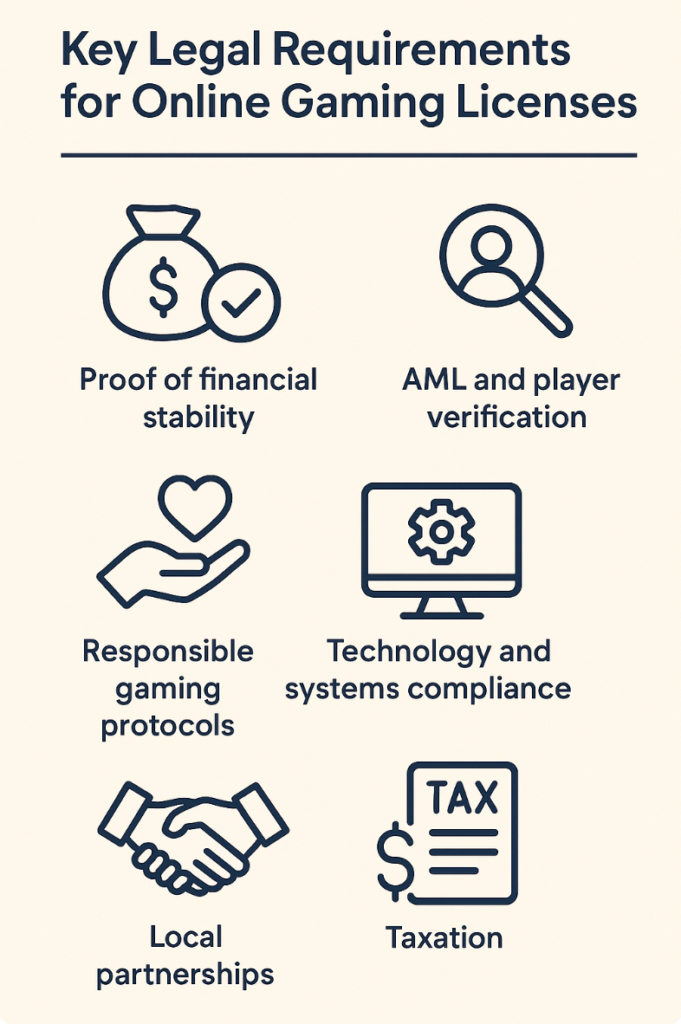
Securing a LATAM online gaming licence usually means proving the business can run safely, fairly, and transparently. The finer details change from one country to another, but several requirements show up across most jurisdictions:
Technology compliance: Platforms are typically audited by independent bodies for fairness, security, and anti-fraud resilience. Brazil, for example, allows advanced KYC tools like facial recognition.
AML and player verification: Strong anti-money-laundering checks and reliable identity validation are mandatory, designed to prevent illicit transactions and underage play.
Local partnerships: In certain markets, Mexican online casinos being a common example,foreign companies must work with land-based partners or recognised local entities.
Taxation: Tax structures vary widely and can shift with new policy. Depending on the country, operators may be taxed on turnover or gross gaming revenue (GGR).
Main Licensing Authorities
Every LATAM market is ultimately shaped by its lead regulator. The most notable licensing bodies include:
Brazil: Federal government oversight under Law No. 14,790 (2025).
Colombia: Coljuegos, the country’s gambling regulator and one of the most established online gaming authorities in LATAM.
Argentina: Province-level regulators, such as the Lotería de la Ciudad in Buenos Aires City and the IPLyC in Buenos Aires Province.
Peru: SUNAT, which now manages licensing and taxation under the updated framework.
Authorised Operators: Market Leaders and License Holders
LATAM has attracted a blend of home-grown leaders and major global brands. Brazil stands out for scale: from 114 federal licence applications, 35 operators had received full approval by early 2025, covering 173 brands. Colombia, with a more mature and stable structure, has authorised dozens of operators, including prominent European and North American firms.
A clear pattern is emerging around collaboration. UK and Canada-based companies increasingly work with LATAM licence holders to access local knowledge and meet compliance rules efficiently. Brands like bet365 or Betsson often choose partnerships or equity stakes in local operators, using those ties to smooth the regulatory process and adapt faster to on-the-ground realities. This is very similar to joint-venture models already seen in highly regulated markets such as the UK and Canada.
LATAM and Global iGaming Markets: Comparing Licensing Systems
The UK and Canada Context
The UK and Canada sit among the world’s most developed iGaming jurisdictions, built on strict compliance, player safeguards, and well-defined licensing paths. LATAM’s evolution is starting to echo parts of that model in several ways:
Partnerships and technology transfer: Operators from the UK and Canada frequently bring technology, compliance expertise, market insight, and operational infrastructure into LATAM through agreements with local partners.
Channelization and consumer safety: In both regions, market health is strongly tied to channelization,moving players toward licensed sites and away from illegal ones. LATAM countries are now aiming for higher channelization through modern regulation and clearer licensing systems.
Challenges and Opportunities
Operators and investors see enormous upside in LATAM, driven by young, mobile-first populations and continued liberalisation of gambling laws. Still, the region comes with real hurdles:
Regulatory environments can change quickly, and political cycles sometimes reshape market rules with little notice.
Even so, many companies still view LATAM as one of the most exciting growth frontiers in global iGaming.
Towards a Unified, Compliant LATAM Gaming Industry
The LATAM iGaming sector is moving fast, and regulators are increasingly borrowing proven practices from the UK, Canada, and other established markets. Fragmentation and legal complexity haven’t disappeared, but the overall trajectory is clear: more aligned standards, stronger consumer protections, and a more reliable route for new entrants.
While the market still faces structural and legal divides, the bigger direction is toward harmonisation, rising channelization, and smoother, more predictable market access.
Louis has been working in the online gambling sector for 3 years. During this time, he has reviewed, compared and analysed many bookmakers in many different countries, and published several hundred betting articles for different sports and betting sites.